
The Ultimate Guide to Magnetic Track Lighting Systems
Learn what magnetic track lighting is, how it works, where it can be used, and how to choose the right system for modern homes, villas, showrooms, and commercial interiors.
Magnetic track lighting is a modular low-voltage lighting system that allows different lighting modules to be installed, repositioned, and combined on one track platform.
It is widely used in modern residential and commercial interiors because it supports clean ceiling design, flexible lighting layouts, multiple lighting layers, and smart control options.
This guide explains the basic concept, working principle, suitable users, lighting module types, installation options, advantages, limitations, and key points to check before choosing a magnetic track lighting system.
BASIC GUIDE
What Is Magnetic Track Lighting?
Magnetic track lighting is a modular lighting system that uses a low-voltage track to provide both power and mechanical support for different lighting modules. The lights are attached to the track through magnetic adapters, allowing them to be positioned, replaced, or combined more flexibly than traditional fixed lighting.
A complete magnetic track lighting system usually includes track profiles, power supplies, power feeds, connectors, lighting modules, and optional smart control devices. Depending on the project, the track can be surface-mounted, suspended, recessed, or trimless recessed into the ceiling.
For modern interiors, magnetic track lighting is often used to create layered lighting, including general lighting, accent lighting, wall washing, task lighting, and decorative lighting.
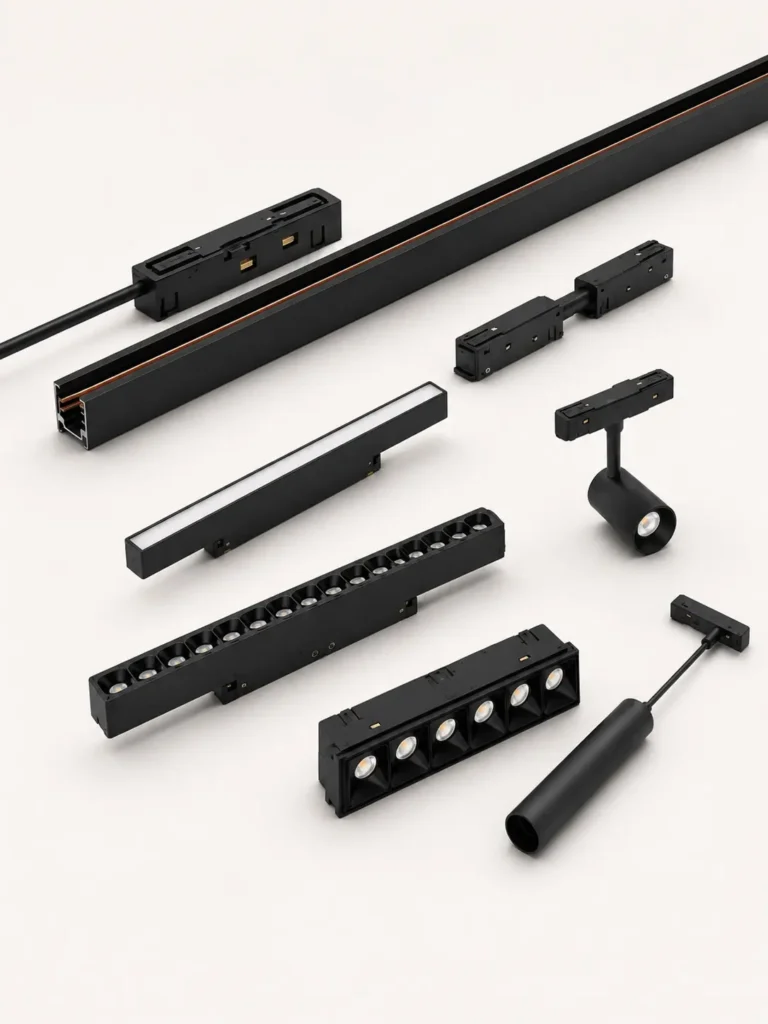
Modular Lighting Platform
Different lighting modules can be combined on one track system for flexible lighting design.
Low-Voltage Power Structure
Most magnetic track systems use low-voltage power, such as 48V DC, for safer architectural lighting applications.
Clean Ceiling Integration
Surface, suspended, recessed, and trimless recessed profiles allow the system to match different ceiling conditions.
WHO IT IS FOR
Who Should Use Magnetic Track Lighting?
Magnetic track lighting is suitable for projects that need flexible lighting layouts, clean ceiling design, and future adjustment possibilities. It is especially useful when designers or project teams want to combine multiple lighting effects within one architectural lighting system.
Homeowners & Villa Owners
Suitable for modern homes, villas, apartments, and smart residential projects that need clean ceiling lines and flexible lighting scenes.
Interior Designers
Useful for creating layered lighting with spotlights, linear lights, wallwashers, grille lights, and pendants on one track platform.
Smart Home Integrators
Suitable for projects that need lighting scenes, dimming, tunable white, DALI, KNX integration, Casambi, Zigbee, or smart control options.
Contractors & Distributors
Useful for project-based supply where track profiles, lighting modules, accessories, and control options need to be matched as one system.
HOW IT WORKS
How Does Magnetic Track Lighting Work?
A magnetic track lighting system works by delivering low-voltage power through a track profile. The power supply converts mains voltage into low-voltage DC power, which is delivered into the track through a power feed. Lighting modules are then installed into the track and receive power through the internal conductors.
The magnetic adapter helps hold the luminaire in position while allowing easier adjustment and replacement. Different modules can be added to the same track, as long as they are compatible with the track structure, voltage, conductor layout, and control method.
The system can be configured for simple on/off control, dimming, tunable white, DALI, KNX gateway integration, Casambi, Zigbee, or other smart lighting solutions.
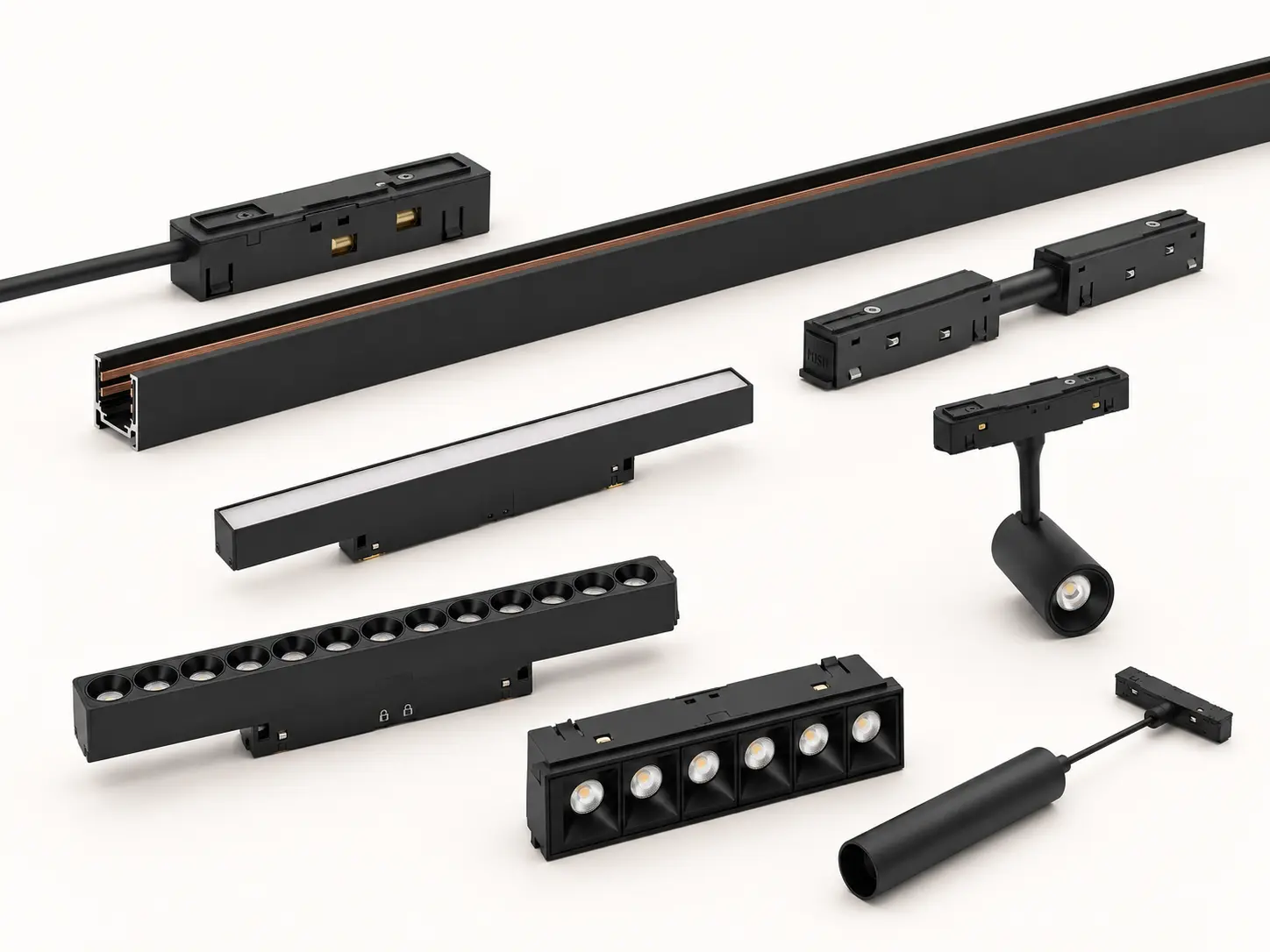
1. Power Supply
Converts mains voltage into low-voltage DC power for the track system.
2. Power Feed
Connects the power supply to the magnetic track and delivers power into the circuit.
3. Magnetic Track
Provides the structure and electrical connection for the lighting modules.
4. Lighting Modules
Spotlights, linear lights, wallwashers, grille lights, and pendants create different lighting layers.
SYSTEM COMPONENTS
Main Components of a Magnetic Track Lighting System
A magnetic track lighting system is not only a track and a lamp. It is a complete lighting platform made from several coordinated components. Each component affects installation, safety, lighting performance, control compatibility, and long-term maintenance.
Track Profile
The main structure for mounting lighting modules and distributing 48V low-voltage power.
Power Supply
Converts mains voltage into stable 48V DC power for the magnetic track system.
Power Feed
Connects the power supply to the magnetic track and delivers power into the system.
Connectors
Used to join track sections and support straight, L-shape, T-shape, or customized layouts.
Lighting Modules
Includes spotlights, linear lights, grille lights, wallwashers, and pendant modules.
Smart Control Options
Supports project-based control solutions such as DALI-2, KNX integration, Casambi, and Zigbee.
A 48V Magnetic Track System Is Not Only A Track And A Lamp.
It is a coordinated lighting platform where power, structure, modules, connectors, and control options work together.
LIGHTING MODULES
Types of Magnetic Track Lights
One of the biggest advantages of magnetic track lighting is the ability to combine different lighting modules on one track system. Each module has a different function and helps create a different lighting layer.
Designers can use spotlights for accent lighting, linear modules for general lighting, wallwashers for vertical surfaces, grille lights for low-glare focused lighting, and pendants for decorative or task lighting.
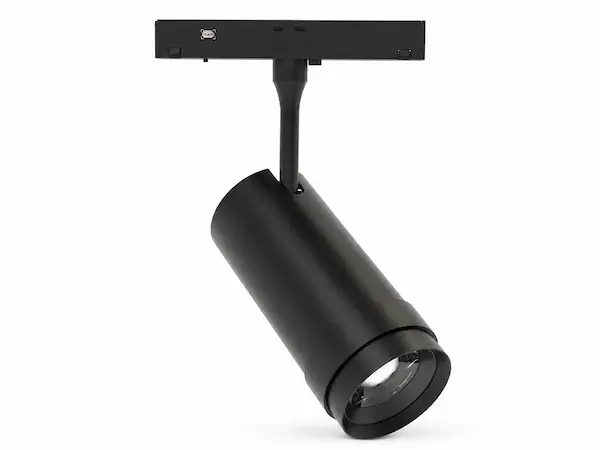
Magnetic Spotlights
Adjustable spotlights are ideal for accent lighting, artwork, display shelves, feature walls, and focused residential lighting scenes.
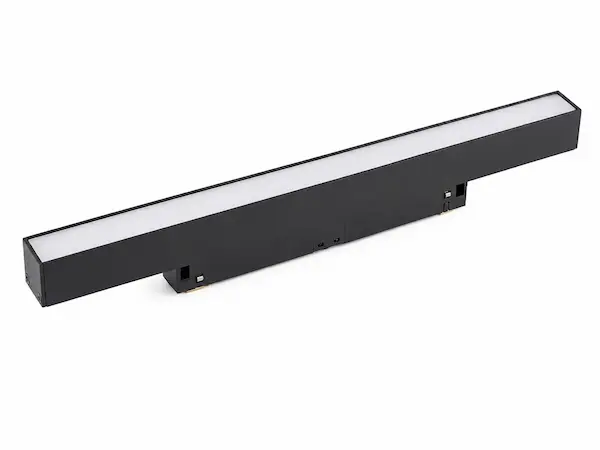
Linear Light Modules
Linear modules provide clean, continuous general lighting for living rooms, corridors, kitchens, offices, and modern architectural interiors.
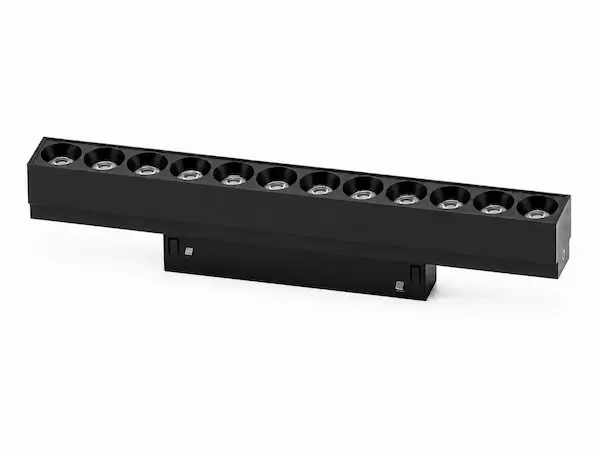
Grille Light Modules
Grille lights provide low-glare focused illumination for villas, hotels, lounges, and premium residential spaces.
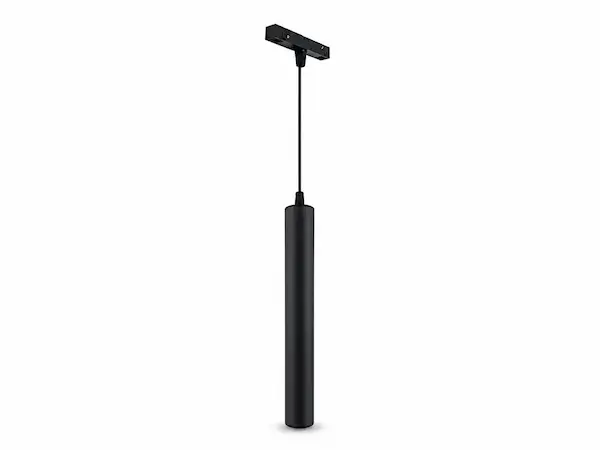
Pendant light modules
Pendant modules add decorative and task lighting for dining tables, kitchen islands, counters, and reception areas.
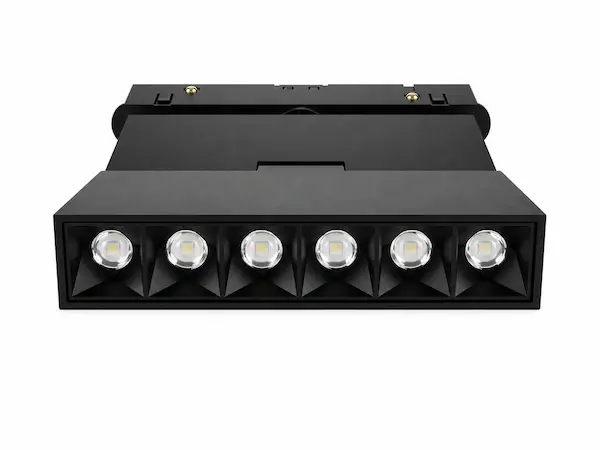
Wallwasher Modules
Wallwasher modules create soft vertical illumination for walls, wardrobes, galleries, showrooms, and decorative architectural surfaces.
DESIGN IDEAS
Magnetic Track Lighting Ideas for Homes and Commercial Interiors
Magnetic track lighting can be used in both residential and commercial spaces because it supports flexible lighting layouts and clean ceiling design. By combining different modules, one track system can create ambient lighting, task lighting, accent lighting, and decorative lighting.
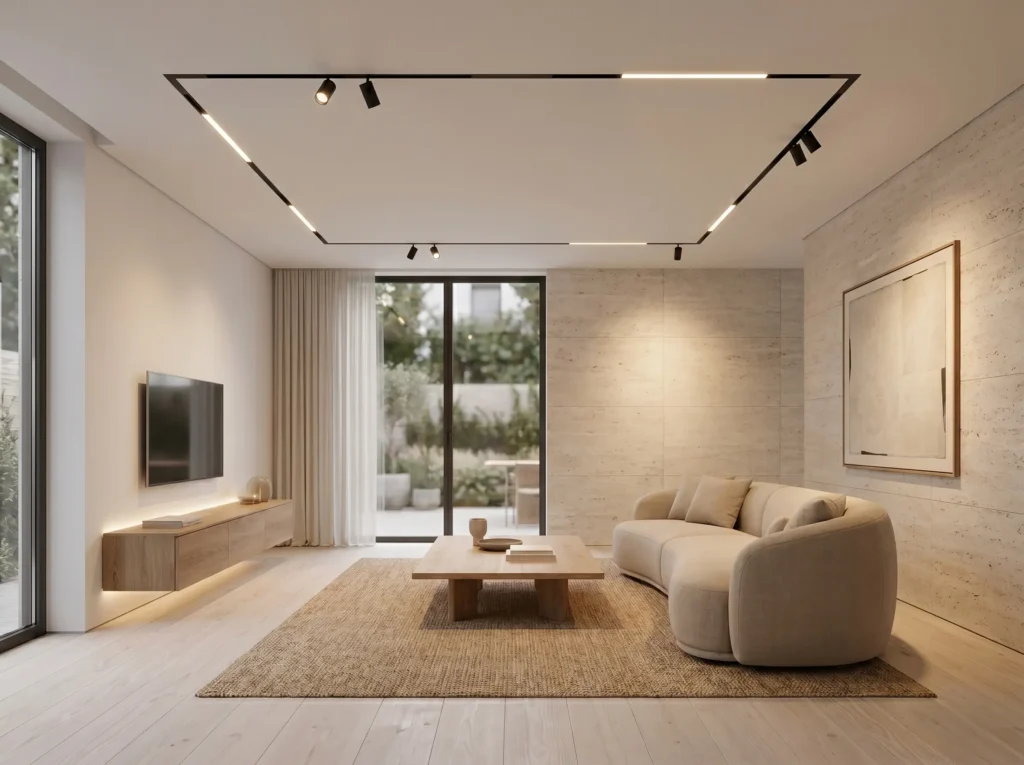
Living Room
Use spotlights, linear lights, and wallwashers to create layered lighting for seating areas, artwork, TV walls, and feature walls.
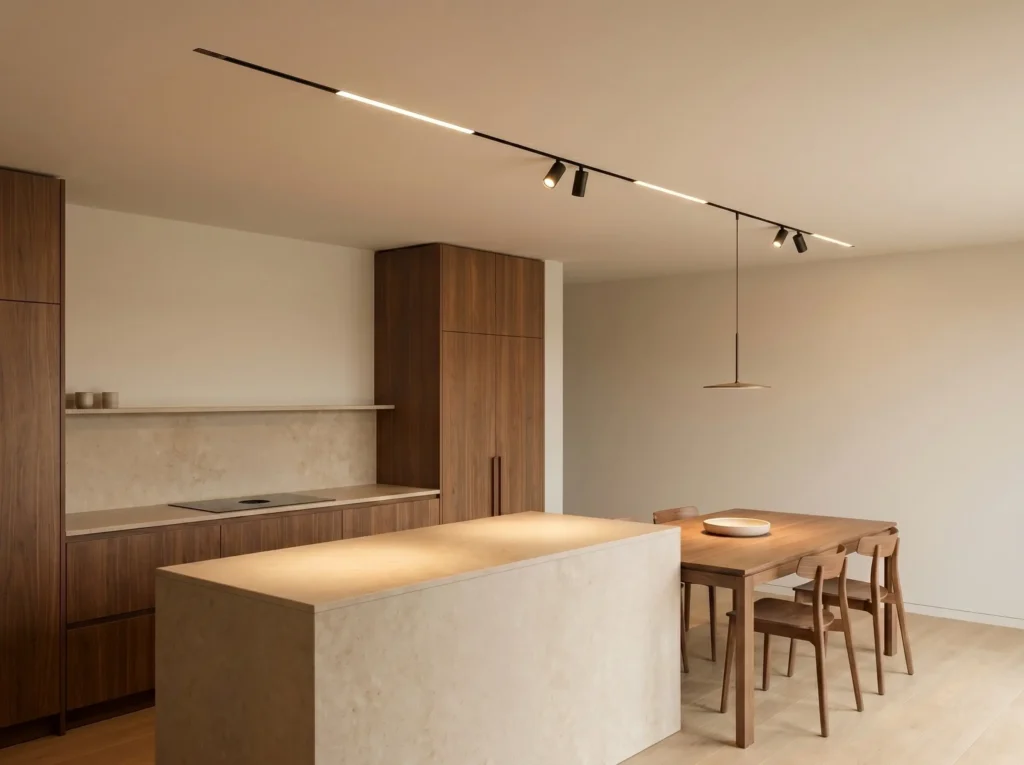
Kitchen & Dining Area
Use linear modules, spotlights, and pendant modules above kitchen islands, countertops, dining tables, and preparation areas.
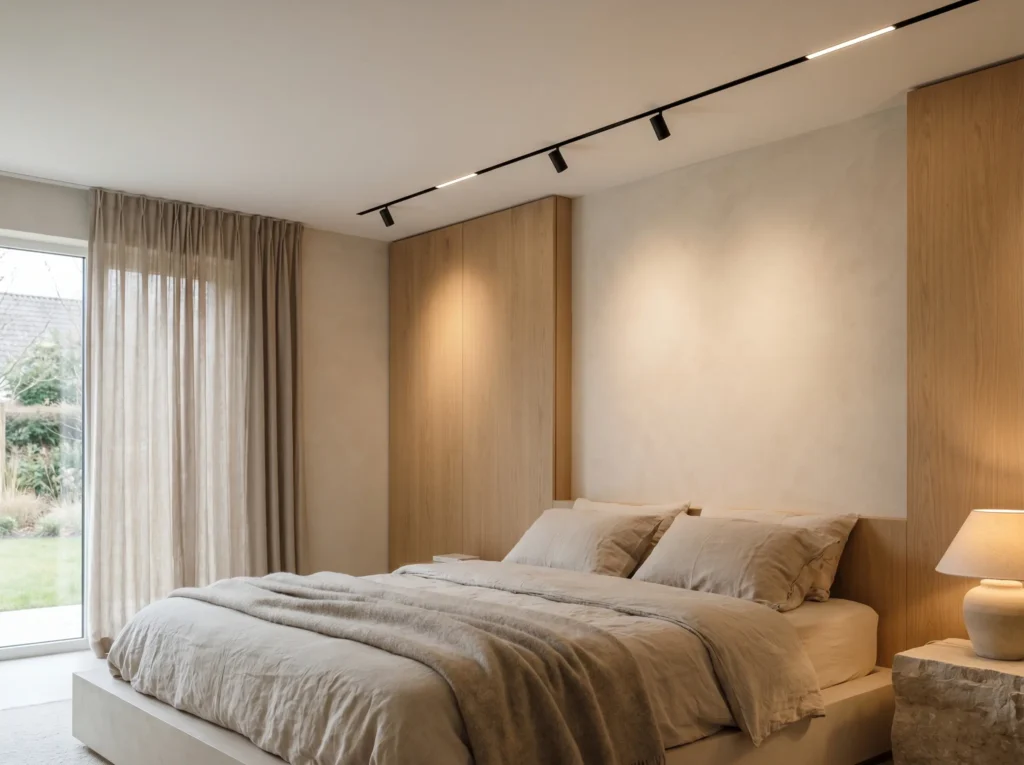
Bedroom
Use low-glare spotlights and soft linear lighting to create a comfortable and calm residential atmosphere.
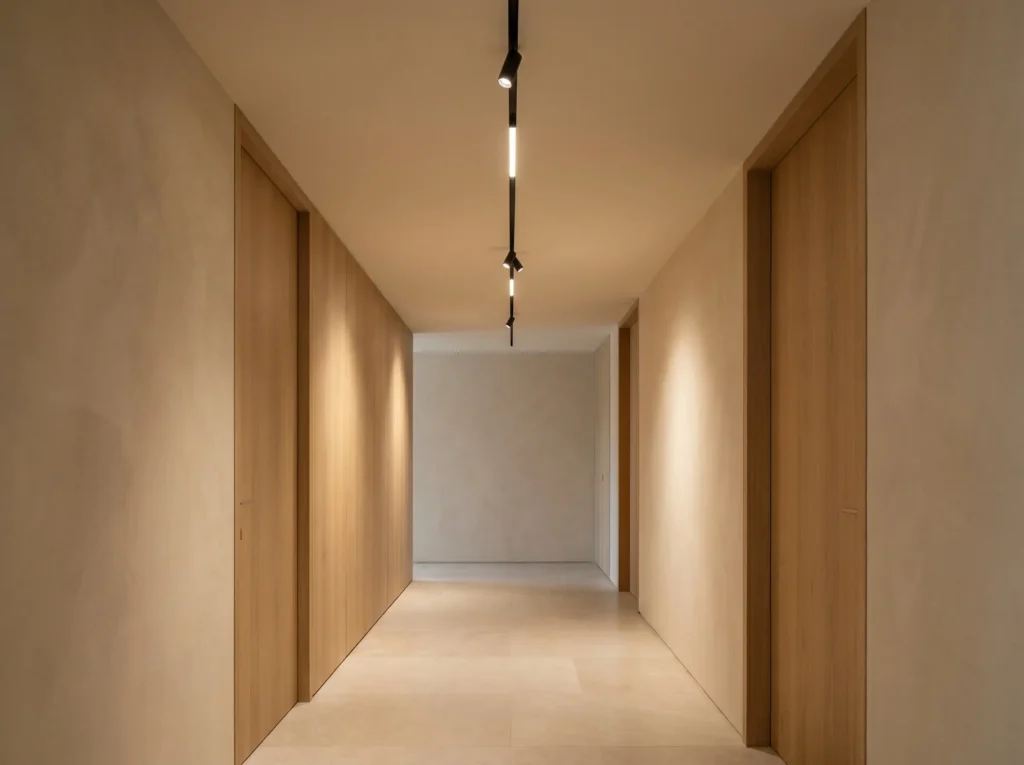
Corridor
Use linear modules or small spotlights to guide movement and create a clean architectural ceiling line.
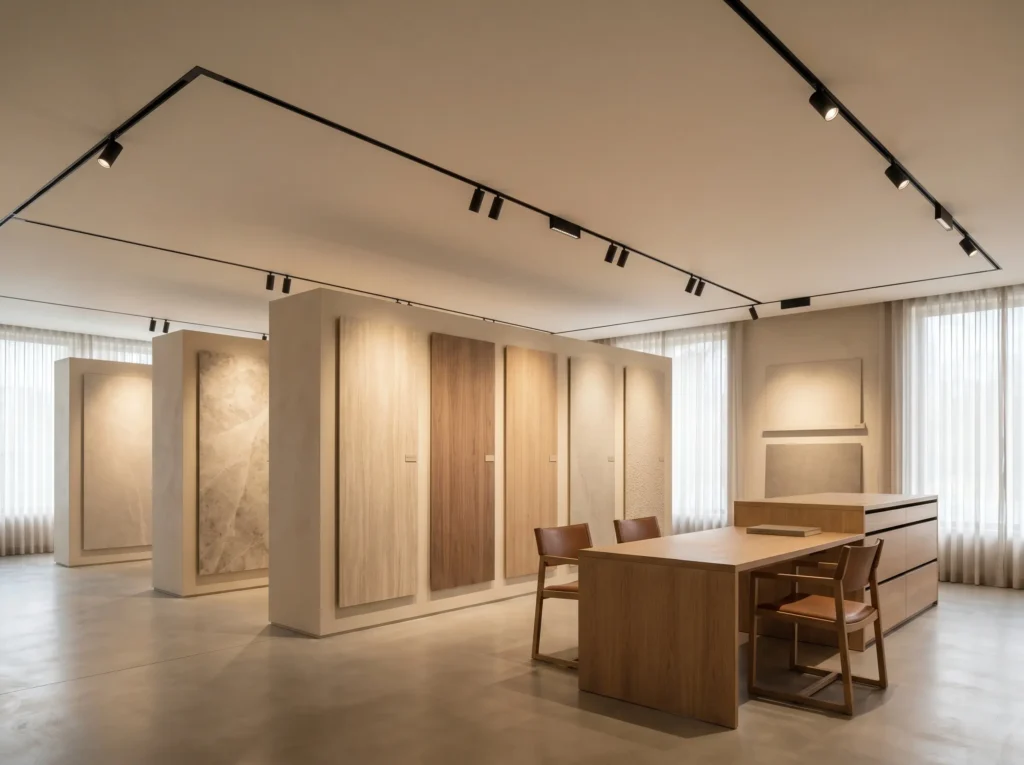
Showrooms
Use adjustable spotlights and wallwashers to highlight products, materials, display walls, and customer experience areas.
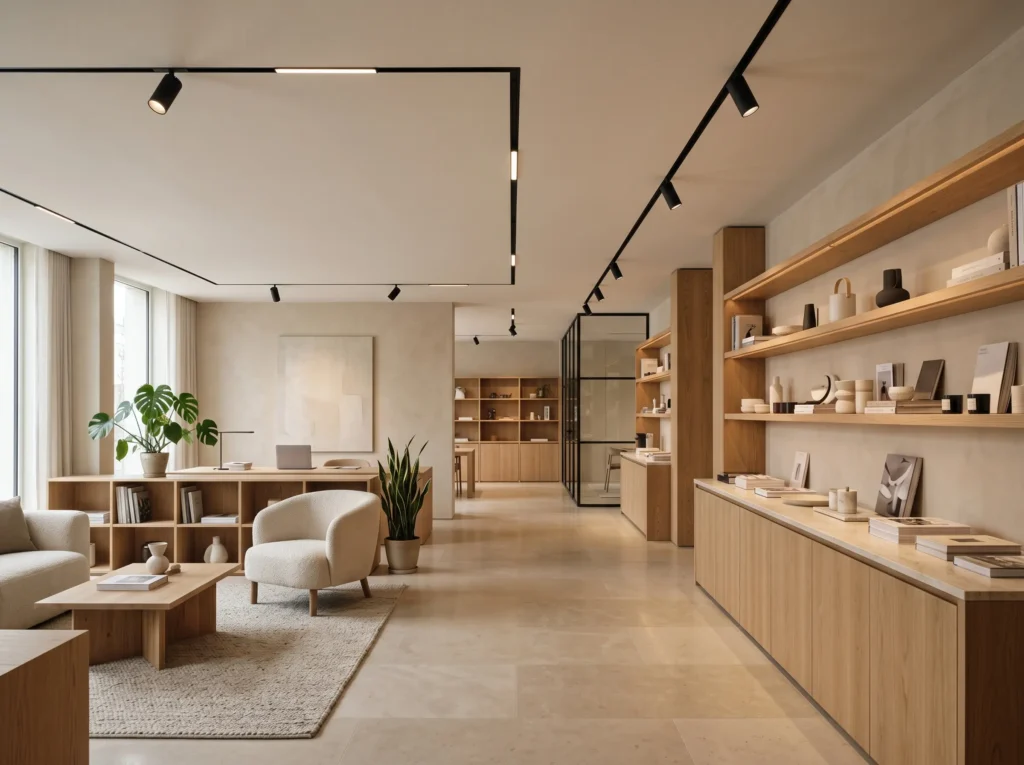
Office or Retail Space
Use magnetic track lighting to support flexible layouts, changing displays, work areas, and modern commercial interiors.
COMPARISON
Magnetic Track Lighting vs Traditional Track Lighting
Magnetic track lighting and traditional track lighting both allow adjustable lighting layouts, but they are designed for different project needs. Magnetic track systems usually offer a cleaner appearance, lower-voltage structure, modular lighting options, and better integration with modern interiors.
| Feature | Magnetic Track Lighting | Traditional Track Lighting |
|---|---|---|
| Appearance | Slim, modern, and architectural | More visible and technical |
| Voltage | Usually low voltage, such as 48V DC | Often mains voltage |
| Module Replacement | Magnetic modules can be repositioned more easily | Track heads are usually more fixed |
| Module Options | Spotlights, linear lights, wallwashers, pendants, and grille lights | Mainly spotlights and track heads |
| Ceiling Integration | Surface-mounted, suspended, recessed, or trimless recessed | Mostly surface-mounted or suspended |
| Smart Control | Can support DALI, KNX integration, Casambi, and Zigbee | Depends on the driver and track head |
| Cost | Usually higher system cost | Often lower initial cost |
| Best For | Modern homes, villas, showrooms, and premium interiors | Retail, galleries, and general commercial lighting |
INSTALLATION OPTIONS
Surface-Mounted, Suspended or Recessed Magnetic Track?
Magnetic track lighting can be installed in different ways depending on the ceiling structure, project stage, and desired visual finish. For existing ceilings or projects without a false ceiling, surface-mounted or suspended track is usually more practical. For new plaster ceilings or premium residential projects, recessed or trimless recessed profiles can create a cleaner architectural finish.
The Topsund M20 magnetic track system includes four main profile options: M20A surface / suspended track, M20B trimless recessed track, M20C embedded trimless track, and M20D recessed track with frame.
M20A
Surface / Suspended Track
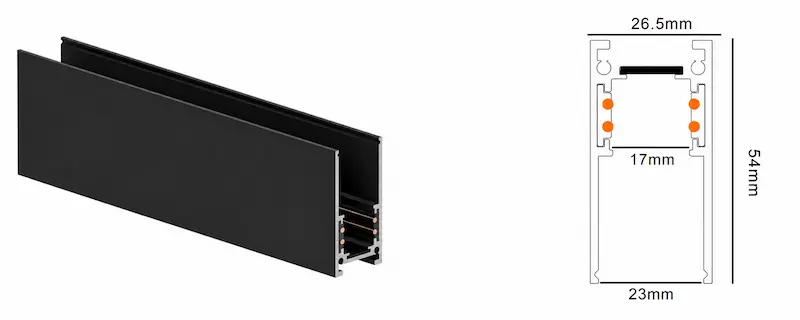
Best for existing ceilings, concrete ceilings, apartments, showrooms, offices, and renovation projects where ceiling cutting is not required.
M20A can be installed directly on the ceiling surface or suspended from the ceiling, making it the most practical option for retrofit and no false ceiling projects.
M20B
Trimless Recessed
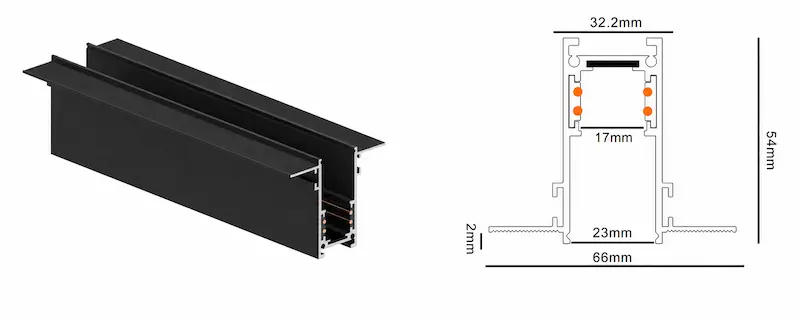
Best for plaster ceilings where a seamless trimless finish is required.
M20B is designed for clean recessed integration within plasterboard ceilings. It is suitable for new construction or renovation projects where ceiling cutting and finishing are already planned.
M20C
Embedded Trimless Track
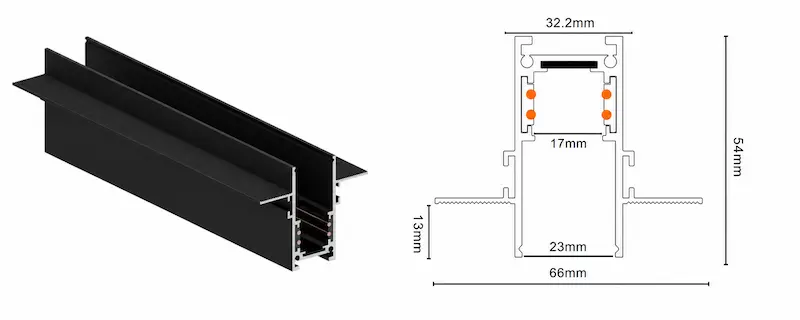
Best for pre-planned architectural ceiling integration.
M20C is suitable for projects where the ceiling structure is prepared before installation. It provides a deeper integrated finish and is recommended for high-end residential and architectural lighting projects.
M20D
Recessed Track with Frame
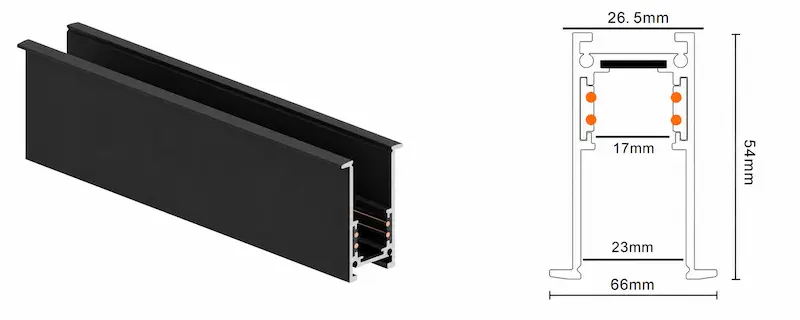
Best for standard recessed ceiling installation where a visible frame edge is acceptable.
M20D provides a clean recessed appearance while being more practical than a fully trimless installation. It is suitable for projects that need recessed installation with simpler ceiling finishing.
PROS AND LIMITS
Advantages, Limitations and When Magnetic Track Lighting May Not Be the Best Choice
Magnetic track lighting is flexible and modern, but it still needs proper planning. Understanding both the advantages and limitations helps avoid wrong product selection, installation problems, and compatibility issues.
Advantages
Flexible Lighting Layout
Lighting modules can be repositioned, replaced, or combined according to changing room layouts.
Clean Modern Ceiling Design
Slim track profiles and compact modules create a clean architectural lighting effect.
Multiple Lighting Layers
Spotlights, linear lights, wallwashers, grille lights, and pendants can work together on one track system.
Smart Control Compatibility
The system can support DALI, KNX integration, Casambi, Zigbee, and other smart lighting options.
Limitations
Compatibility Must Be Checked
Not all magnetic tracks and lighting modules from different factories are universally compatible.
Installation Needs Planning
Ceiling structure, driver position, power feed, polarity, track length, and control method should be confirmed before installation.
Cost Can Vary
The final cost depends on track length, modules, control method, installation type, project quantity, and ceiling condition.
When It May Not Be the Best Choice
Magnetic track lighting may not be the best choice for every project. It may be less suitable when the project requires the lowest possible initial cost, when there is no accessible space for power supplies or wiring, when the interior style requires traditional decorative fixtures, or when unknown third-party tracks and modules need to be mixed without compatibility testing.
BUYING GUIDE
How to Choose the Right Magnetic Track Lighting System
Choosing a magnetic track lighting system is not only about selecting a track. The ceiling condition, room function, lighting effect, module type, control method, and supplier support should all be considered.
7 Selection Points
1. Check the Ceiling Type
Decide whether the project needs surface-mounted, suspended, recessed, or trimless recessed installation.
2. Define the Room Function
Living rooms, kitchens, bedrooms, showrooms, offices, and retail spaces require different lighting layouts.
3. Choose the Lighting Modules
Select spotlights, linear lights, grille lights, wallwashers, or pendants according to the lighting purpose.
4. Confirm Track Length and Layout
Plan straight runs, corners, L-shape layouts, T-shape layouts, or curved sections before ordering.
5. Plan the Power Supply
Confirm driver capacity, power feed position, total wattage, and maintenance access.
6. Select the Control Method
Choose non-dim, dimming, DALI, KNX integration, Casambi, Zigbee, or other smart control options.
7. Check Supplier Support
For B2B projects, sample testing, technical drawings, product matching, and project quotation support are important.
FAQ
Frequently Asked Questions About Magnetic Track Lighting
Need Help Choosing a Magnetic Track Lighting System?
Send us your project layout, ceiling type, lighting requirements, and control preferences. Topsund can help recommend the right magnetic track profile, lighting modules, and system configuration for your project.